https://wereonanadventure.com/wp-content/uploads/2025/03/phuket-cover.jpg
869
1158
wereonanadventureblog@gmail.com
/wp-content/uploads/2023/11/Were-On-an-Adventure-logo-1.svg
wereonanadventureblog@gmail.com2025-04-23 10:17:542025-04-23 10:17:54Things To Do In PhuketG-Free Travel Rating
6/10
Major Airport
Mae Fah Luang – Chiang Rai International Airport (CEI)
Official Language
Thai (most tour guides will know some English)
Currency:
Thai Baht
Power Outlets:
Types A, B, C & O
Voltage is higher = 220V
Chiang Rai Province
Opposite the stunning beaches of Phuket and bustling city vibe of Bangkok, Chiang Rai sits in the northern most region of Thailand offering a more laid back atmosphere. This area is becoming more popular by the day for backpackers and cyclists looking to soak up nature through exploring the various trails. Chiang Rai was actually a stepping stone on our way to Laos. We decided we wanted to do a slow boat tour down the Mekong River and the only way we could do that was from northern Thailand. We flew from Phuket to Chiang Rai and then hired a private driver to drive us to Chiang Khong.
Why a private driver?
Because the drive from Chiang Rai to Chiang Khong ranges from 1.5 – 2 hours. You could take a bus or do Grab; but we felt better about hiring someone for a full day. Plus, the price wasn’t that different than a Grab and this way they’re paid for the way there and back; whereas, Grab the driver may not get a client to drive back to make commission on.
We also wanted to see the Golden Triangle but didn’t want to drive that far on a moped. It was a more comfortable drive with air conditioning and we didn’t have to go back and forth to the hotel before heading to Chiang Khong. Plus, the driver was done 4 hours earlier than what the day was so I’m sure he appreciated that.
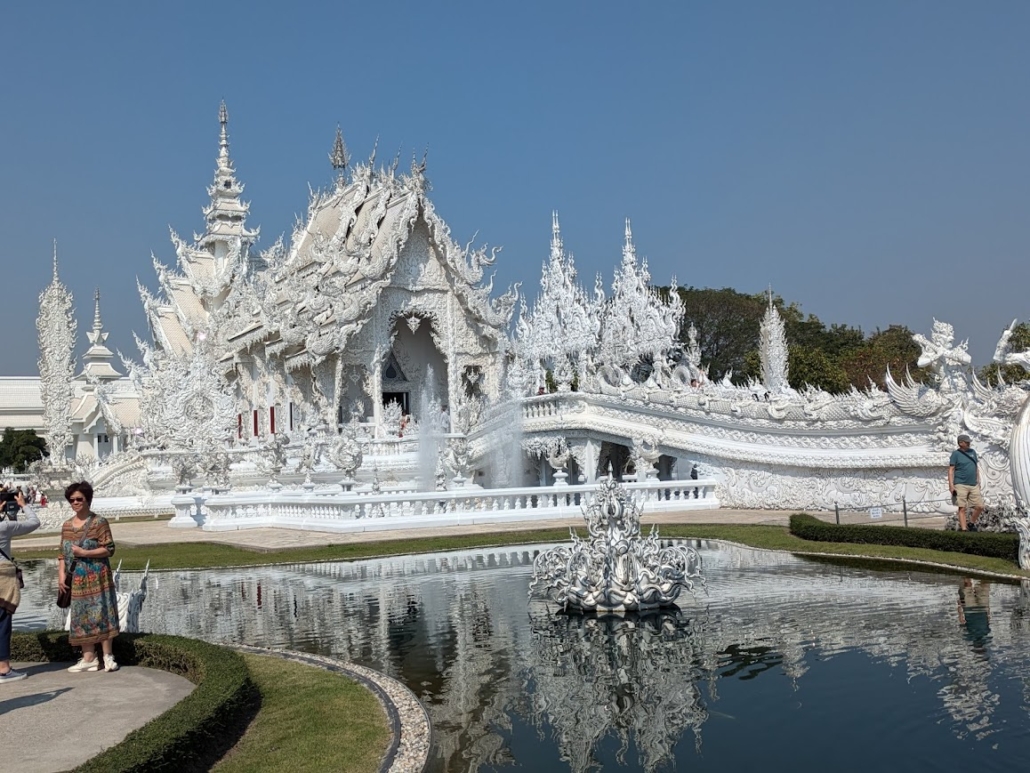
Wat Rong Khun
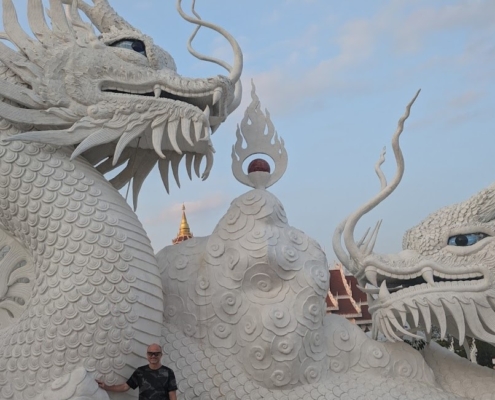
Known as the White Temple. It was constructed in 1997 by a local painter/architect Chalermchai Kositpipat known for his eccentric personality, which is clearly seen throughout the temple with its brilliant white exterior representing purity to its pool of reaching arms representing desire to finally the interior where he painted contemporary scenes representing rebirth and delusion. This is a stark contrast to all the other temples where you see the traditional Buddha life illustrations. This is a must visit if up in this area.
Entrance Fee: 100 baht/pp
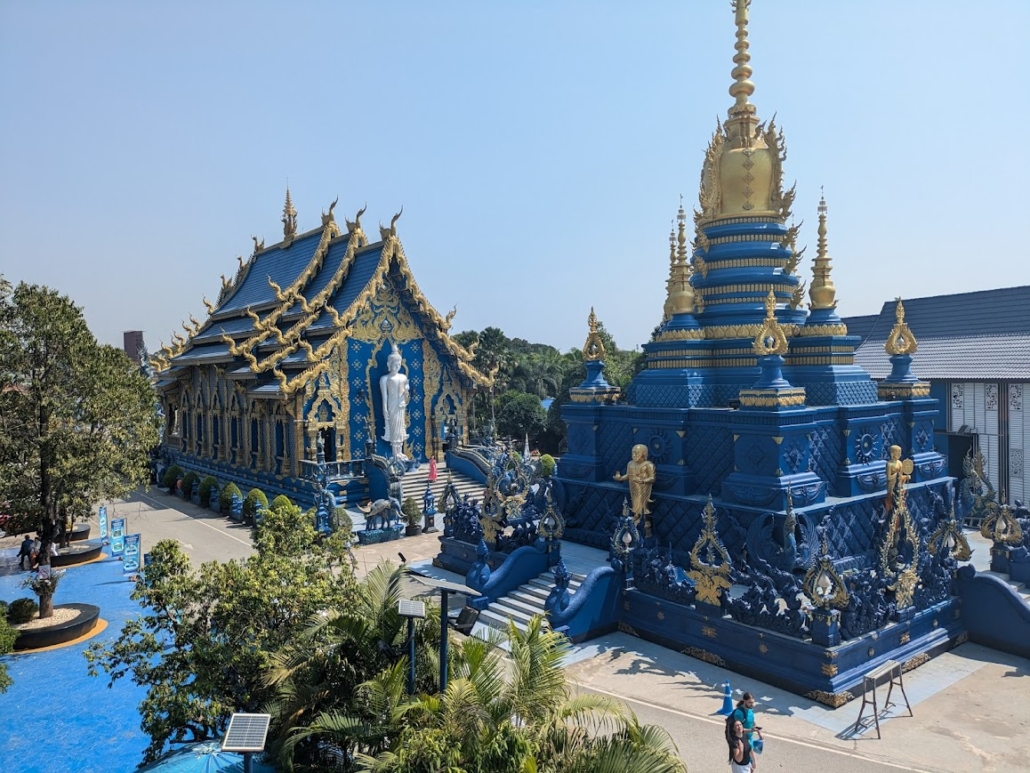
Wat Rong Suea Ten
Known as the Blue Temple even though its name translates as the “temple of the dancing tiger.” Rumor has it there was a temple here a century ago that was abandoned and tigers were said to roam freely over the land. Needless to say this is a much more recent temple to the Chiang Rai scene. It is a striking royal blue that dominates the temple’s design accented with gold trim both inside and out.
Entrance Fee: FREE
The Black House
While we didn’t make it here because I started to feel overheated. It sounds like it is quite the sight to see. Constructed of wood painted black or dark brown and filled with various pieces and paintings constructed out of animal bones, skins or horns. The compound is a total of 40 buildings of different shapes and sizes you can wander through and take in this unique view displayed on Buddhist philosophy.
Entrance Fee: 80 baht/pp
Wat Huai Pla Kang
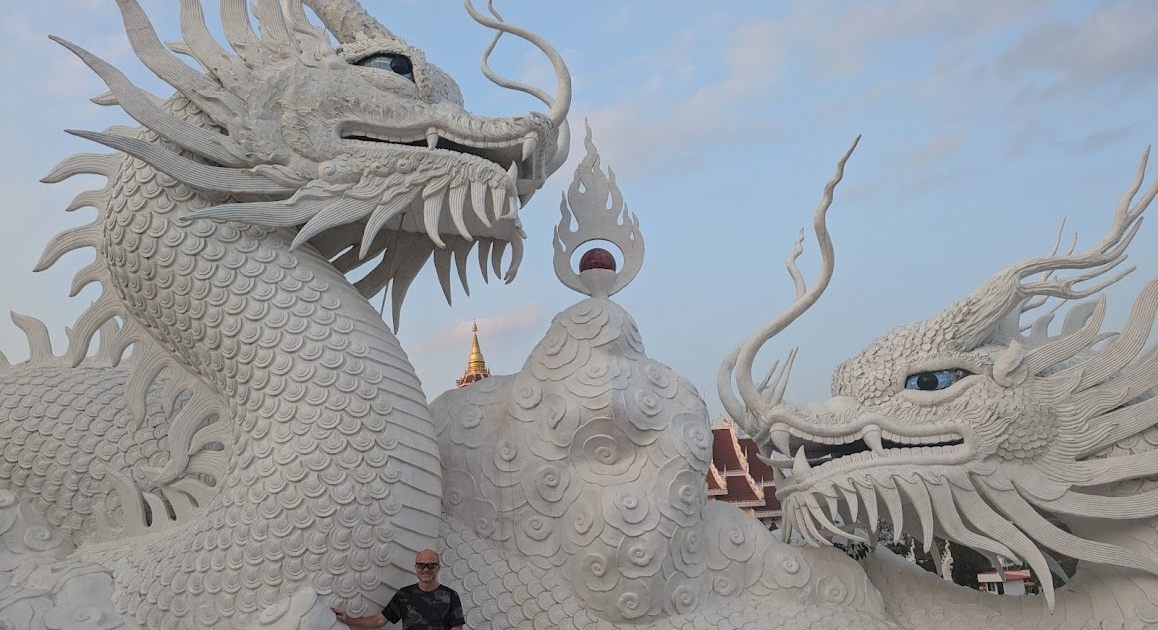
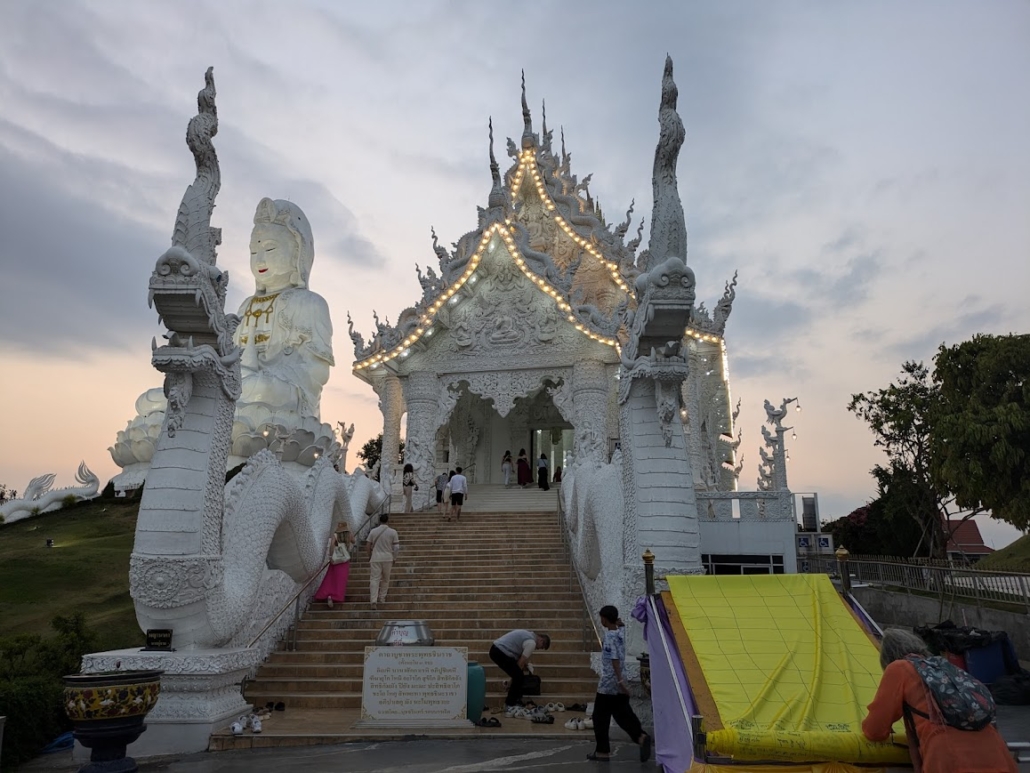
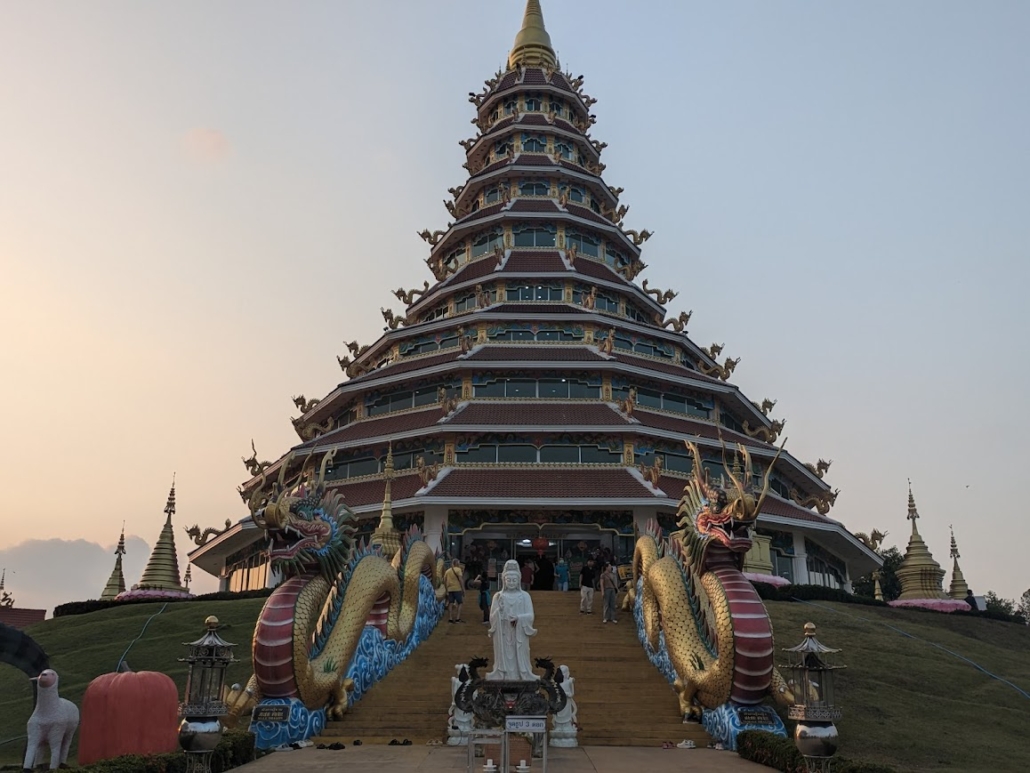
This temple is not as well known as the above mentioned temples but it is none the less impressive. It was also designed by a visionary, a monk named Phra Ajarn Phob Chok, who blended the Chinese and Lanna styles. It is built on a mountaintop featuring a 9-story pagoda and a 25-story Guan Yin statue. Not to be confused as a Big Buddha, she is the ‘Goddess of Mercy’. You are able to climb the stairs of the pagoda or take an elevator up the Guan Yin statue to get panoramic views of the mountains and tea plantations in the distance.
Helpful Hints:
- There are no elevators in the pagoda so you will be climbing stairs to get to the top. The stairs become more narrow and uneven each floor then ending with a narrow spiral staircase.
- No entrance fee for the 3 buildings; however, it is 40 baht/pp if you want to take the elevator to the top of Guan Yin…stairs were closed when we went.
- Best time to go is at sunset and we believe the best picture is actually from the top of the Pagoda.
- Stick around a little longer after sunset and they turn the lights on offering a whole new ambiance.
- They have trollies that run from each building if you don’t want to climb the hill to their entrances.


The Golden Triangle
The region, known as the Golden Triangle, is where the borders of Myanmar, Thailand and Laos meet at the confluence of the Mekong and Ruak rivers. It is well known in history for the cultivation and trade of opium. While that has come under control in Thailand and Laos, Myanmar is still producing the world’s largest amount of opium. It is about a 45 minute drive from Chiang Rai, but definitely worth a visit if you have time.
Entrance Fee at viewpoint: Free
The House of Opium
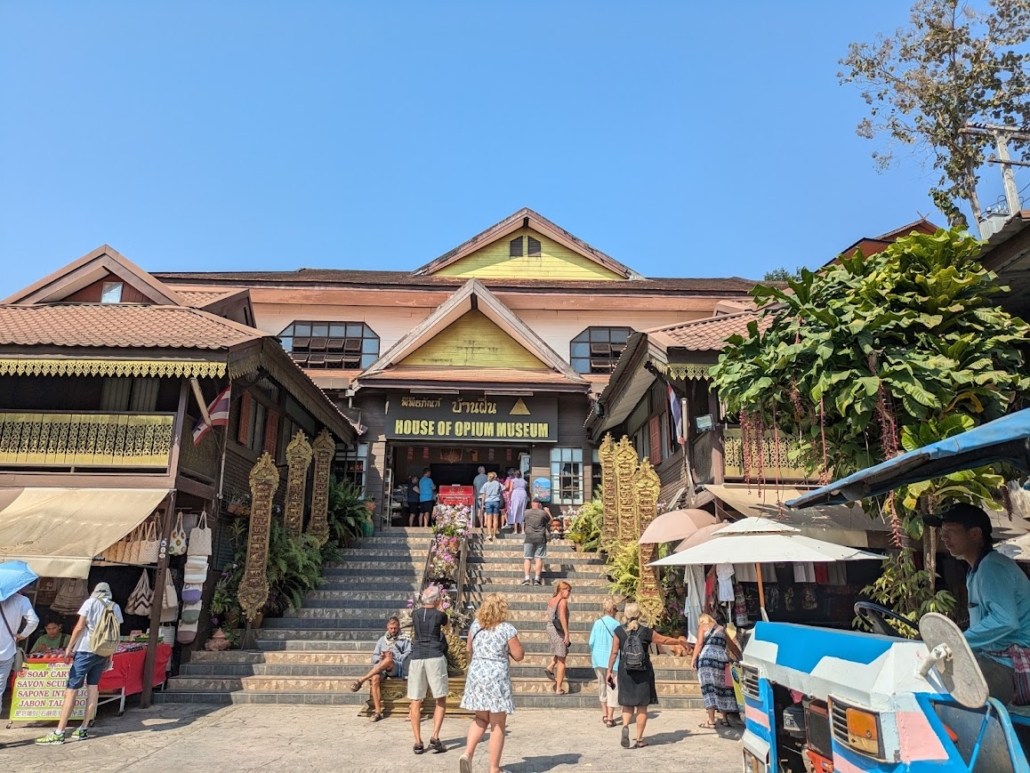
Not far from the Golden Triangle lays the House of Opium. This is a museum that focuses on the history and impact of the opium trade in Southeast Asia. Its exhibits are a collection of harvesting tools and scales that were used throughout the different tribes and decades. It also highlights the cultivation of the poppy seed. But, if you are looking for a more in depth experience then we recommend trying the Hall of Opium.
Entrance Fee: 50 baht/pp
Chiang Khong
Located in the Chiang Rai province this is a small relaxing city located on the bank of the Mekong River. It is mainly a stop-off point for people on their way to Laos as it is one of the few Thai-Lao Friendship bridges that you are able to cross. Similar to the rest of the province it has endless trails where you can see people cycling, running or out for a stroll.
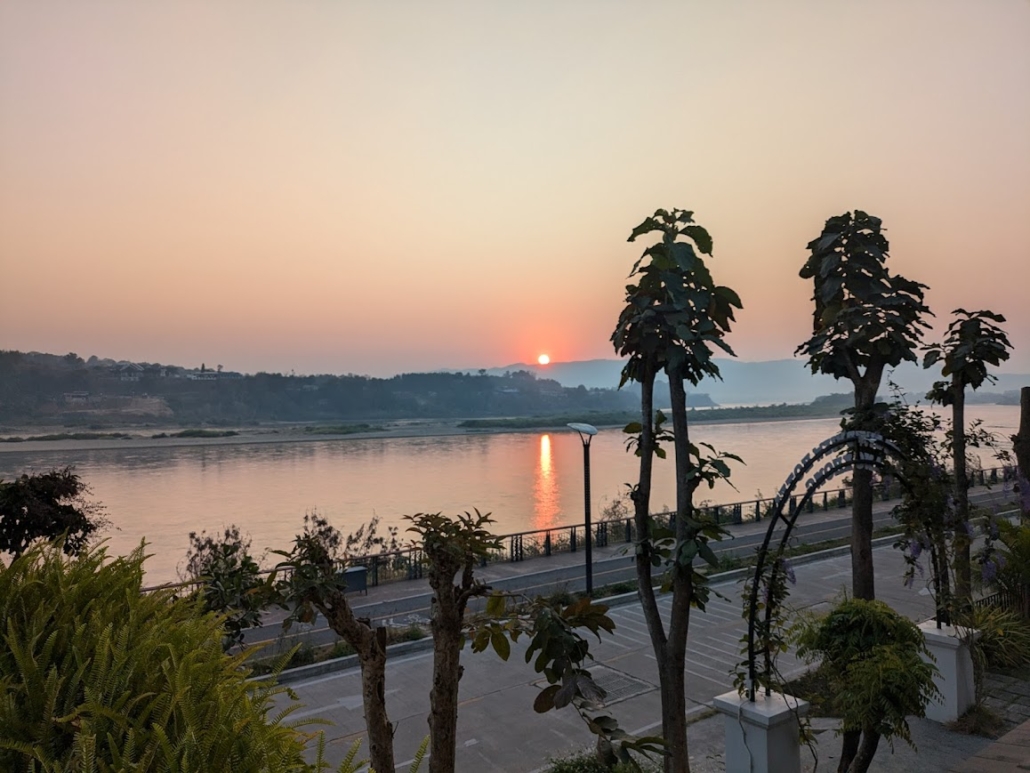
If you are there for only one night check out the Fortune River View Hotel. Located right off the Mekong River the sunset views from the restaurant or your balcony are breathtaking. If you need to cool down after a day of exploring then dip your toes into their swimming pool…it was too chilly for my liking.
Gluten Free Restaurants
Now that we finally made it to the good stuff there are a lot of the same precautions that you need to take up here as you did in Bangkok and Phuket. In the end, the precautions will be the same for all Asian countries. However, we hope our list of restaurants in this area will help you get at least one stress free meal.
Chiang Rai
The Legend Chiang Rai: This is the boutique hotel we stayed at but I figured I would mention it since we ate breakfast here 2 days and one dinner at their restaurant- La Casa & Wine Casa.
- Buffet: Terry didn’t have many options to choose from but they had an omelet station so that is what he ate for the two days. They don’t clean the skillet between customers but none of the mix-ins offered had gluten so cross-contamination was not an issue. They also had some fresh fruit and yogurt.
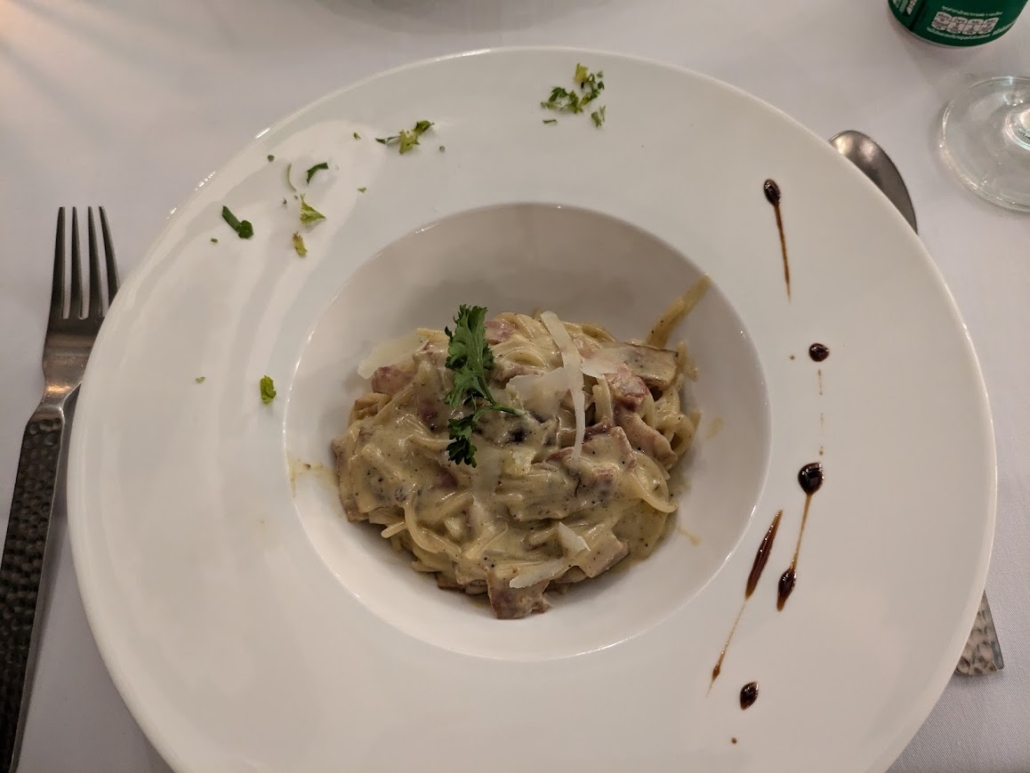
- La Casa & Wine Casa: An Italian restaurant located within the hotel. They offered fresh fish as well, which is what I had but Terry was able to get gluten free pasta. The menu was not labeled with which items were gluten free and the initial person we asked was unsure but a more seasoned waitress overheard the conversation and was quick to explain they had gluten free pasta and which dishes could be accommodated.
Accha Authentic Indian Cuisine: Recommended to us by the owner of Barrab. The menu was not marked with what could be made gluten free and the waitstaff didn’t seem to grasp what we were asking thus we were becoming disappointed with why we were told to come here. Luckily, the chef knew all about the restrictions and Terry was able to get his butter chicken dish he has grown to love.
The Most Knowledgeable Restaurant we Found in Thailand…
Barrab: This is a quaint restaurant that has all the bells and whistles one hopes for in knowledge of gluten free. While the main menu does not indicate which items are gluten free the owner had made a separate menu with those items. She has also done the same for numerous other dietary requirements. From there she further broke it down into which ones were spicy. She was very knowledgeable and she spoke very good English so we weren’t worried something would be lost in translation. You are also able to do samples of some of the food items specific to the area. Overall, the experience surpassed our expectations.
Chiang Khong
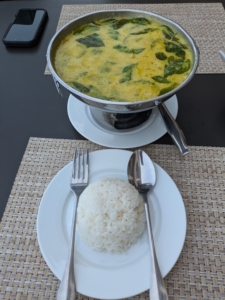
The Fortune River View Hotel: Since we were only in Chiang Khong one night we decided to eat at the restaurant. We didn’t see many other options nearby and figured this would be our best chance of accommodations. Menu was not marked and the staff was extremely confused as to what could be made gluten free, even after we gave them the gluten free card. They ended up calling someone to help out. Terry only had three options so he opted for the green curry. While it wasn’t the best one he had he was surprised with the flavor and he didn’t have a reaction.
For breakfast they had a very small buffet. He was only able to have a fried egg and a couple pieces of fruit. Luckily, we packed granola bars with us so he was able to eat one of those if needed. Since we weren’t sure how the slow boat to Luang Prabang was going to be for the next two days he was hoping to fill up on breakfast.
Now we’re off to Laos on a slow boat!