https://wereonanadventure.com/wp-content/uploads/2025/05/luang-Prabang-scaled.jpg
1014
2560
wereonanadventureblog@gmail.com
/wp-content/uploads/2023/11/Were-On-an-Adventure-logo-1.svg
wereonanadventureblog@gmail.com2025-06-08 08:33:072026-06-28 11:12:38Best Things to do in Laos While Traveling Gluten-FreeG-Free Travel Rating
6/10
Major Airport
Luang Prabang International Airport (LPQ)
OR
Wattay International Airport (VTE)
Official Language
Lao (most tour guides will know some English)
Currency:
Laotian Kip
Power Outlets:
Types A, B, C, E & F
Voltage is higher = 230V
Slow Boat Tour
We ended our Thailand trip in Chiang Rai so we could see as much of Thailand as possible and then take a slow boat down the Mekong River to Luang Prabang, Laos. We booked our slow boat cruise with Nagi of Mekong. This ended up working well for us because they helped transport us across the Thailand/Laos borders and could accommodate a gluten free diet.
Land Crossing
The morning of our departure they came and picked us up in a van and transferred us to the Thailand border. This was easy but quite a few other groups were doing the same thing. Luckily, it went smoothly for being organized chaos. Once through, we were loaded onto buses and transferred onwards to the Laos border.
Here is where it gets a little interesting. Depending on where you are from, you may need to complete an On Arrival VISA. Nagi of Mekong had already given us one when we checked into the hotel in Thailand. They also told us how much USD cash the VISA would be. What they didn’t tell us was there is another charge (scam) at the beginning. The government was collecting 40 baht from everyone. While this is not a lot, it is still something no one was prepared for. We had some baht left over, but that was not the case for everyone. There are ATMs nearby if the situation comes to that.
They are also extremely picky about the crispness of the bills that you use to pay for the VISA. My husband was denied three times before they accepted the $20 USD he gave them. Just be aware scams are common at land crossings and make sure the money you have is very crisp with no markings on it.
Officially on the Slow Boat
Once we finally made it through the border crossings we were taken to board our boat. Upon entering you have to remove your shoes so you track in as little sand and dirt as possible. Then you place your luggage in the front and find your designated seat. Get comfortable because that is where you are going to be for the next day and a half. You are able to walk around the boat and head to the back or the front to take in the views. Our boat had 4 bathrooms and a kitchen with a small bar. Water, tea and coffee were provided as part of the trip; soda and alcoholic beverages were an additional cost. The kitchen supplied plenty of food for everyone on the trip.
Eating on the Slow Boat
Prior to embarking on this trip, we had confirmed at the time of booking they could accommodate a gluten-free diet. Because they seemed well versed with the topic we didn’t dive into the sauces. Once aboard there seemed to be mass confusion about the gluten-free requirements. They understood everything except the sauces. Needless to say, the first day we couldn’t eat everything that was originally prepared for us because it was prepared with soy sauce. To be honest it wasn’t a big deal because the chef was able to whip us up something very quickly and it was more than enough food. It just didn’t have any meat in it.

The next day we were all more prepared and we gave them our gluten-free soy sauce we had brought from home that was buried in our suitcase the day before. Outside of being a little confused why this soy sauce was okay and theirs wasn’t; the food was fantastic and plentiful. Plus, we were always served first so it was fun to watch everyone’s eyes follow the plates to our table. Breakfast and dinner were our responsibility but the hotels where we stayed were able to accommodate a gluten-free diet.
Passing the Time
Since this is not a cruise ship, there are not endless things to do nor is there WIFI on the boat. The best thing to do is admire the scenery and watch for wildlife. The most common wildlife to see on the banks of the Mekong are cattle and “pink” water buffalo but some have even seen elephants. Other things to keep an eye out for children panning for gold or fishing. To break up the days you make a couple stops at a few rural villages to learn how they live. At one village you get to sample the “whiskey” they distill from rice.
On the second day there is also a stop at the Pak Ou Caves. They are not large caves but the climb to get to the top will work your legs after long days of sitting. Otherwise, make sure to pack a book or bring your travel cribbage board. Once early evening arrives you will be disembarked and taken to your chosen hotel.
Overnight in Pak Beng
Our tour company gave us a few recommended hotels to choose from for the overnight. We ended up staying at Le Grand Pakbeng Resort. This hotel was at the top of a very steep hill and the villas were built into the hill. The rooms were very spacious and modern; however, it was a climb to get to the main office and restaurant. This hotel has a pool if you are interested in a refreshing dip.
The restaurant, Indochine, was able to accommodate a gluten-free diet. The waitstaff was fairly knowledgeable about which dishes could be made gluten-free. They were willing to ask for clarification if needed. The meal was very good but a little pricier than we had anticipated. Breakfast was a buffet so you need to be careful about cross-contamination. We would recommend sticking to foods you know are gluten-free. They were busier at this time and didn’t have as strong a desire to help us out. Either way all meals went off without a hitch and we didn’t have to survive on granola bars for those days.
The Living Land Farm
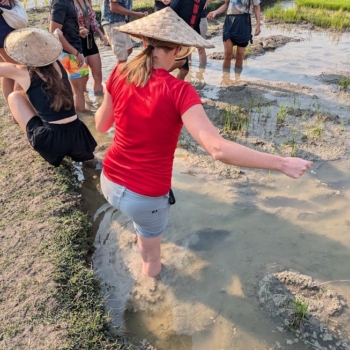
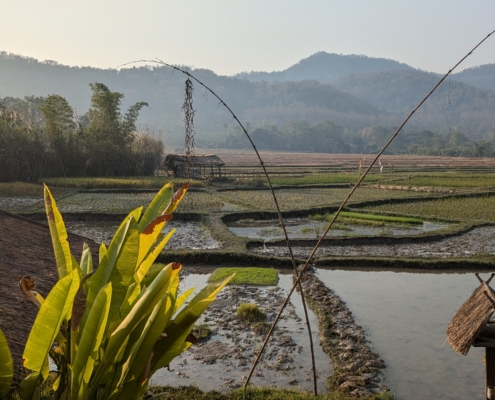
With rice being a main staple to their diet and most Lao families growing it as part of their farm, we decided we couldn’t miss an opportunity to experience life in the day of a rice farmer. Boy, did we underestimate the amount of work that goes into producing just a small amount of rice. Although, I’m not sure why since our garden never seems to produce the amount we anticipate.
Anyways, we were a little nervous it was going to be geared towards children, but it was not. It was very informative and as immersive in each part of the planting and harvesting process as you would like. Take your shoes off, step into the muddy rice paddy and start planting.
1/2 day Rice Experience: $36 USD/ per person – $48 if you wanted to include lunch
Pick-up: Included in your experience price. Picked up via tuk tuk.
Lunch
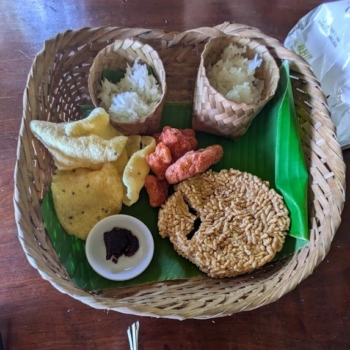
We didn’t take part in the lunch experience because we booked late the night before through our hotel, Maison Dalabua, and didn’t think gluten free would be communicated easily/correctly. If this is something you are interested in, I would recommend reaching out ahead of time to confirm. I would anticipate it would not be an issue if given proper time to accommodate. They did give us snacks after the experience that were all made from their rice they had harvested which were all gluten free. We also got to sip on our sugarcane juice we squeezed during the experience!
Bonus
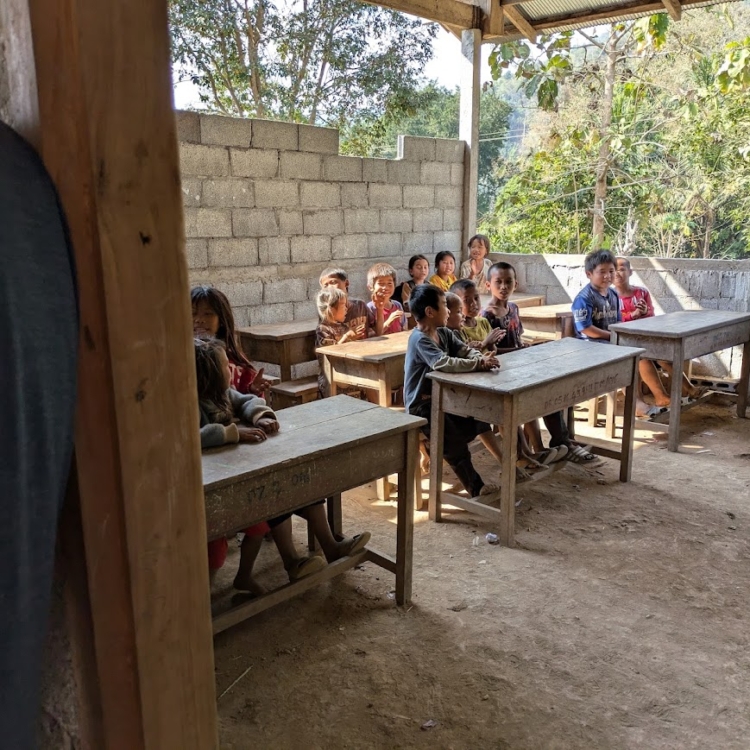
Because they are a community driven project they offer free English language classes to children from local villages, with classes held on their farm. They encourage English speaking tourists to come to their classes so the children have direct experience with speaking English. If you would like to participate in a class, definitely reach out to them to see what their upcoming schedule is.
We went to participate in a class but because it was Valentine’s Day the kids had off. It wasn’t a wasted trip though, we were able to take pictures with the baby water buffalo that was born that morning. Mama told when close was close enough. Even though she was used to being around people, she is still a protective mama and would start getting a little agitated if we went closer than 10 feet. It was nice to just sit and watch the two interact.


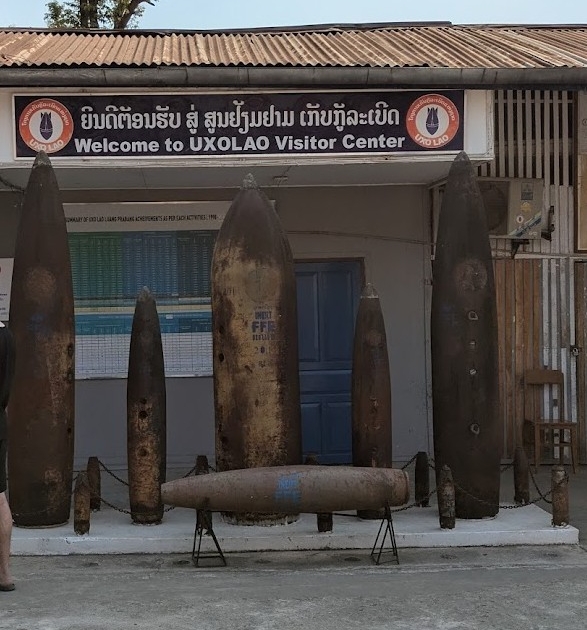
UXO Lao Visitor Center
This museum has been dedicated to the education of visitors on the hardships Lao people still experience today because 80 million UXOs are still unrecovered. These bombs were dropped for 9 straight years between 1964-1973. In fact, Laos is considered to be the most heavily bombed country in the world over the years with a startling statistic of this bombing was equal to one planeload of bombs dropped every eight minutes, 24 hours a day, for nine years.
The Lao people are doing everything they can to educate people on how to stay safe and yet still survive. It is hard to manage both when you don’t know what is buried beneath the surface of the land you are farming. It is a must see, but a somber experience.
Entrance Fee: Free
Catch a Sunrise
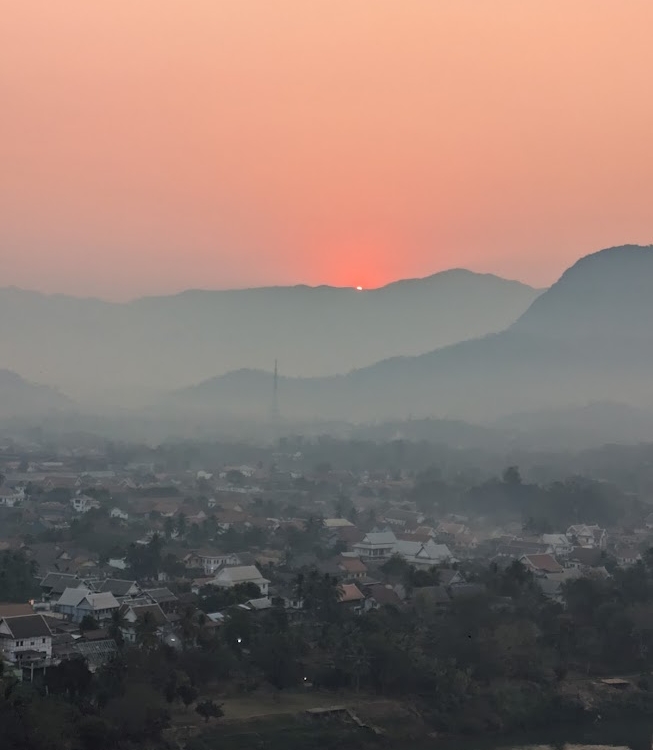
Mount Phousi also known as Phousi Hill is a great place to catch a sunrise or sunset. We decided to rent bikes from our hotel and do an early morning bike ride, observe the Alms ceremony and end our early morning with a hike up Phousi Hill for the sunrise. It actually couldn’t have been more relaxing. The traffic was minimal so early in the morning I wasn’t stressed out bicycling around as other vehicles are flying by me. The weather was cool and the energy during the Alms ceremony and during the sunrise was very peaceful. It really was a great way to start the day.
The views from the top are breathtaking. You can get a panoramic view over looking the whole city of Luang Prabang. The hike up was pretty much just steps, uneven of course. The entrance fee is collected about halfway up the climb.
Entrance Fee: 20,000 kip/pp Cash
The Alms Giving Ceremony
A longstanding tradition in the Laos Buddhist culture thought to have been adopted in the 14th century. While I am sure there have been slight modifications, it is still very sacred. The act of receiving alms is a way to sustain their monastic life. Every dawn dressed in their saffron robes and carrying their traditional alms bowls, they form a single-file procession. Many processions take place around the temples.
Taking Part:
- Dress modestly with covered shoulders and long pants. Remove shoes.
- Food or self-care products are the best donations to give.
- Try not to touch any of the monks.
- Please stay quiet and be respectful.
- If not making a donation please observe from the back.
Other Recommendations
Markets
Similar to Thailand, markets are very common throughout Laos. They are a great way to shop for local food or find local crafts. Luang Prabang has an early morning market from 5 to 10 a.m. every day that highlights typical Laotian food. Every night from 5 to 9:30 p.m, they have a night market that is more for shopping for handicraft souvenirs with plenty of food vendors if you have an itch to try something. But, please remember the risk of cross-contamination is high and most vendors specialize in one or two dishes that can’t be accommodated at the vendor stall.
Temples
Temples play a significant spiritual and historical role in Laos culture. They are very intricate and tranquil grounds allowing people space for seeking spiritual enlightenment. Please remember when touring temples to respect them and dress conservatively as most are still active places of worship. Most of these can be walked to or biked to since they are located within the center of town.
Wat Xieng Thong: One of the most significant and beautiful temples in Luang Prabang. Entrance Fee is 20,000 kips.
Wat Sene: Another beautiful temple in Luang Prabang with no entrance fee.
Wat Visoun: The oldest temple in the city of Luang Prabang dating all the way back to 1513.
Recommendations Outside of Luang Prabang (Day Trips)
- Kuang Si Waterfall: Roughly an hour drive from Luang Prabang and is known for its dazzling blue water in a tranquil forest. It’s a great place for a quick dip and relaxing swim. Be mindful that water levels vary depending on whether or not it is rainy season.
- Butterfly Park: Located only 300 meters from Kuang Si Waterfall. It is a beautiful garden built to educate visitors on local butterflies. There is a small entrance fee of 30,000 kip/pp.
- Ban Chan: A traditional Laotian pottery village just across the Mekong River. Where you can catch a glimpse of the age-old craft of pottery. Learn techniques that have been perfected over generations.
While there is a lot more to do in and around Luang Prabang, we just wanted to offer a few suggestions to get you started. Since we only had a couple days in Laos before we started our long flight home we took advantage of our hotel spa and booked ourselves a massage followed by a lounge by the pool. While it is great to try and see everything there is to see it is impossible to see everything. A lesson we have learned throughout our travels is to make sure to take time to relax!
One Final Thing
When packing, if you discover there are shoes, clothing, and extra snacks that you don’t need when you get home the Luang Prabang Library accepts donations. These donations are then taken to the rural communities where access to resources is very limited.


Gluten Free Restaurants
Now that we finally made it to the good stuff there are a lot of the same precautions you need to take here as you did in Thailand. In the end, the precautions will be the same for all Asian countries. However, we hope our list of restaurants in this area will help you get at least one stress free meal.
Popolo:
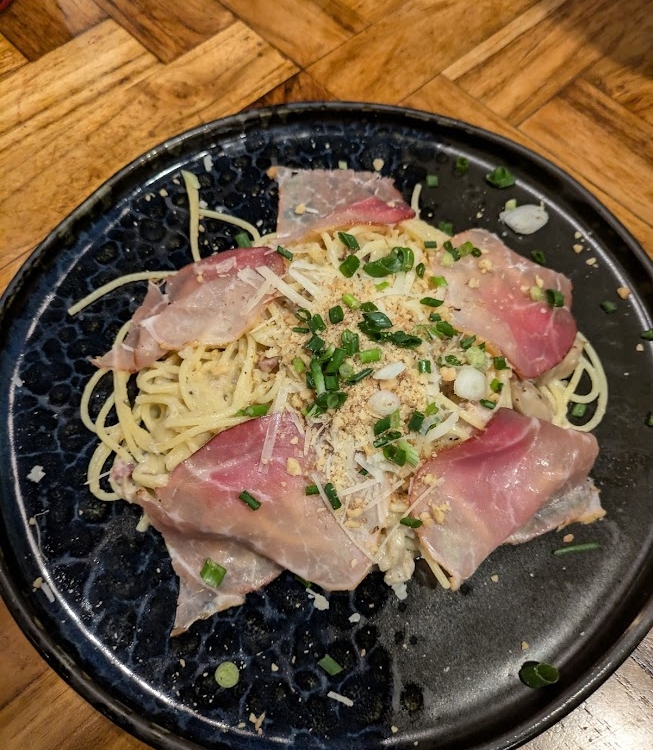
A bustling little restaurant located in Old Towne Luang Prabang. They are known for their wood-fire pizzas (not gluten free) so there are a lot of positive reviews about this place. Upon reading the reviews a couple people mentioned gluten free pasta. We took a gamble and sure enough they did have gluten free pasta. It is not marked on the menu so you have to ask. The waitress was somewhat knowledgeable about gluten free and what it meant. We were pretty comfortable with it since there was no soy or other sauces we had to worry about.
Yuni Yupoun:
Another quaint restaurant located on the main street in Luang Prabang. This time the menu was marked with what was gluten free and there were plenty of options. Staff was easy to communicate with and understood gluten free fairly well.
Zaori:
Specializing in curries and now one of Terry’s favorite desserts…mango sticky rice. Menu is not marked with gluten free options so make sure to bring your translate card just in case.
Manda de Laos:
Attached to our hotel; you get to dine amidst their lily ponds in a tropical paradise. It is a very popular restaurant that requires reservations a couple days in advance. The waitstaff is familiar with gluten free but are not entirely sure which items can be fully accommodated to the gluten-free diet. Fret not, their iPad tells them upon ordering and if they have further questions they went and asked the chef. The food was fantastic. Please reiterate every time you order something that it needs to be gluten-free. As I ordered ice cream for dessert and it came out with little cookie crumbles on it (didn’t even know it came with those). While for me not a huge issue since I’m a preference but if it were Terry, it would have been a totally different situation. Of course, he ordered mango sticky rice for dessert.
Maison Dalabua:
This is where we stayed for the few nights we were in Luang Prabang. Lucky, for us they included breakfast. Breakfast was served as a buffet; however, it was easy to use your own utensils to ensure no cross-contamination. While we didn’t know what everything was we did have a member of the staff who was very knowledgeable walk through each item with us. Unfortunately, he wasn’t there everyday so a couple times Terry stuck to what he knew was safe. When we checked-in the host stated they have gluten free bread so he was lucky enough to get a loaf of gluten free bread each morning.
Terry even learned to drink blackish coffee (he added about 4 little packets of brown sugar to it). They had some of the best brewed coffee I have ever had to the point we went around to local coffee shops trying to find the exact brand they brewed. We were not so lucky.