



https://wereonanadventure.com/wp-content/uploads/2024/01/gorilla1.jpg
869
651
wereonanadventureblog@gmail.com
/wp-content/uploads/2023/11/Were-On-an-Adventure-logo-1.svg
wereonanadventureblog@gmail.com2024-02-08 10:30:552025-11-02 13:13:21Gorilla TrekkingG-Free Travel Rating
5/10
Major Airport
Entebbe International Airport (EBB)
Official Language
English and Swahili
Currency:
Ugandan Shilling
Power Outlets:
Type G
What I wish I knew before going gorilla trekking
- They are strict on the 1 hour
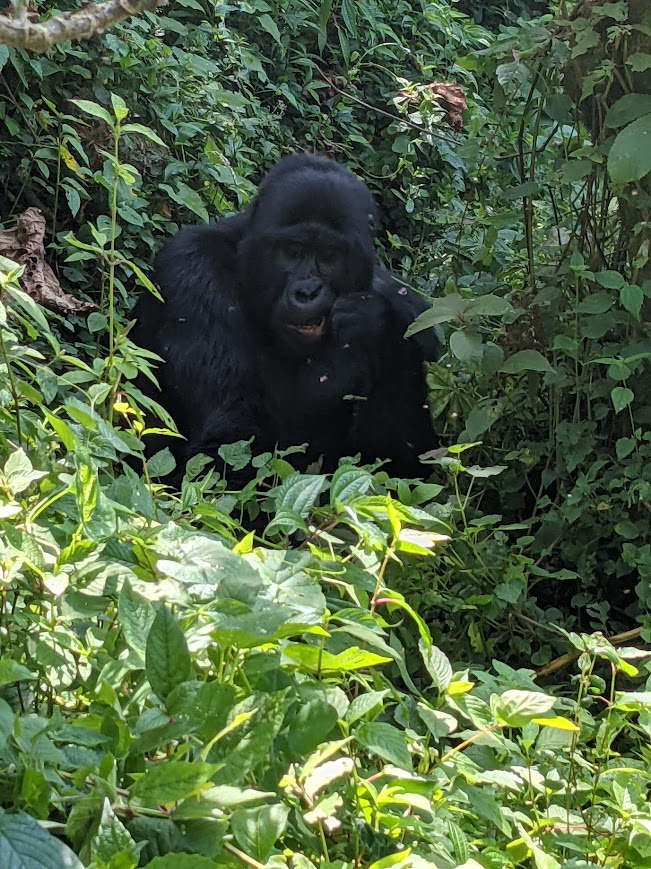
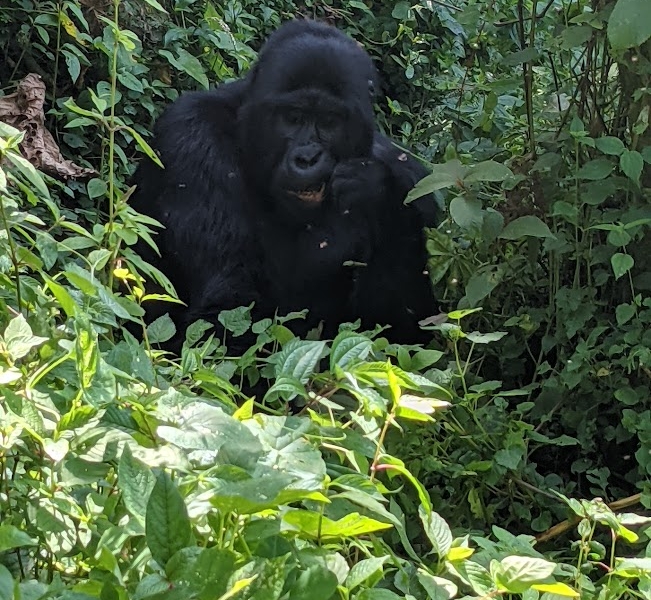
- The gorilla encounter is different for everyone but one thing always remains the same, you only get one hour with them. This is done to minimize their contact with the human population. They aren’t used to being around us for long periods of time…a good thing! During this one hour the guides try to minimize your presence as much as possible. They have you leave any day packs or extra jackets at a stopping point prior to seeing the gorillas. They also have you wear masks to help protect the gorillas from any human borne illnesses (this may still be in affect after COVID).
- If you are looking for more time with the gorillas, try booking a gorilla habituation experience. The main differences between gorilla trekking and gorilla habituation is time and money. During a gorilla habituation experience, you get to spend up to four hours with a gorilla family getting them used to being around humans. For a gorilla habituation experience it is about $1500 USD while a gorilla trekking permit is $800 USD.
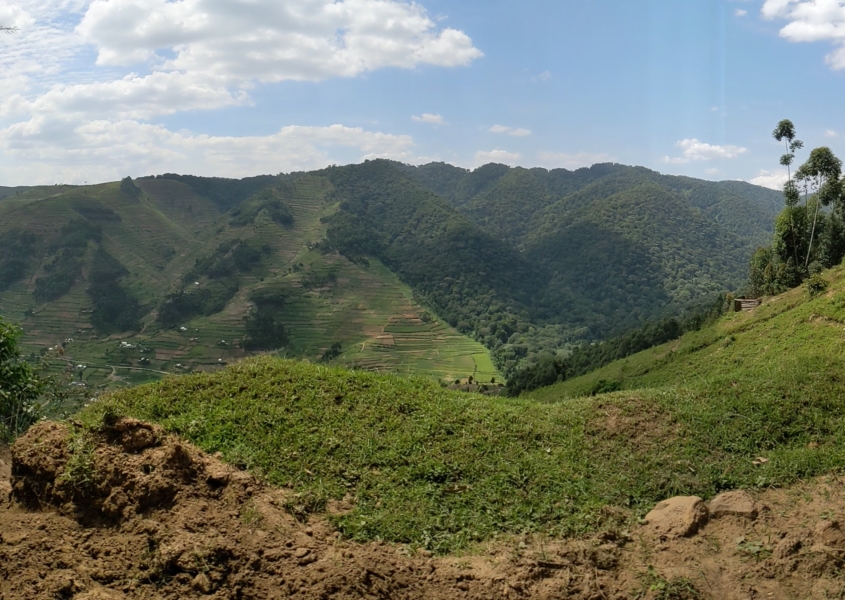
- The gorillas can be deep into the jungle surrounding the mountains.
- Meaning the trek can take anywhere between one to eight hours and can be extremely strenuous at times. Everything you traverse going down you get to traverse going back up! They have trackers go out earlier than you to follow the movement of the gorilla family you’ve been assigned. Once you’re through the briefing, they drive you to a starting point on the side of dirt road.

- You are literally hiking through the jungle.
- The path is unpaved and the guides are cutting the way through the jungle as you go. Keep in mind you will have to step over or duck under fallen trees. The ground is uneven so a sturdy set of hiking shoes or boots is a must. If it rained the night before or currently raining, the trek could be muddy.
- While watching the gorillas the guides/trackers are chopping viewpoints for you on the spot. Very rarely did we get perfect views of the gorillas without a random branch or leaf in the way.
- Dress in layers.
- It was cool in the morning but as the day went on, it warmed up. Also, plan to get warmed up during the hike back up the mountain. I would recommend taking a light rain jacket in case it rains during the time you are there. Uganda has a tropical environment so rain can come at anytime of the year.
- Long socks and pants are also a must. These help protect you from getting scratched by the brush. And help prevent unwanted pesky insects from biting.
- If you use your hands a lot for balance when hiking, I would recommend wearing a pair of gardening gloves. This will help protect you from thornier plants and insects in a place where you may need to place your hand.
Now Let’s talk about the creepy crawlies!
- Army Ants are a real concern.
- These are aggressive ants that provide a bite/sting if you stand in the wrong place. Since it is a jungle, you may not see them before you place your foot or hand down to get over a log. While hiking the guides do provide a warning if they see a trail of army ants scrambling across the path; they proceed to have you high step quickly over that area. Then once you get in a safe spot away from the trail of army ants they stop and check to make sure no-one has any hiding on them.
- My Mom seemed to get the occasional one even though she was probably the most layered. She even had a stow away that hid the 4 hours to Lake Bunyonyi and when she grabbed her hiking boots to carry them into the lodge it latched on her finger and didn’t want to let go.
- Flies and mosquitos are also prevalent.
- As you get closer to the gorillas, the amount of flies increases significantly. This is actually how the trackers know they are getting close to a family of gorillas. While the flies and mosquitos are helpful in that matter, they can also be transmitters of various illnesses.
- As you may have noted upon your research of Uganda, it is required to have the yellow fever vaccine. That is because it is prevalent in this area and one of the main illnesses tourists may contract if bitten by an infected mosquito.
- Anti-malarial medications are also recommended to be taken while in Uganda and also to prevent contracting malaria if bitten by an infected mosquito.
- Other prevalent illnesses that don’t have any additional preventatives are Dengue (mosquito) and African Sleeping Sickness (tsetse fly).
- Uganda is working to decrease their burden of the tsetse fly on public health and has worked hard to achieve the eradication of one of the variants that causes African Sleeping Sickness.
- If you are interested in reading more information about these illnesses, the CDC and WHO are great resources.
- As you get closer to the gorillas, the amount of flies increases significantly. This is actually how the trackers know they are getting close to a family of gorillas. While the flies and mosquitos are helpful in that matter, they can also be transmitters of various illnesses.
- Dressing in layers or lightweight clothing that covers your arms and legs will help keep you protected from getting bit by these pesky little things or any other insect for that matter. Insect repellant with DEET in it is also very beneficial in helping protect you from the flies and mosquitos you may encounter along your way.