https://wereonanadventure.com/wp-content/uploads/2024/01/gorilla1.jpg
869
651
wereonanadventureblog@gmail.com
/wp-content/uploads/2023/11/Were-On-an-Adventure-logo-1.svg
wereonanadventureblog@gmail.com2024-02-08 10:30:552025-11-02 13:13:21Gorilla TrekkingG-Free Travel Rating
10/10
Major Airport
Entebbe International Airport (EBB)
Official Language
English and Swahili
Currency:
Ugandan Shilling
Power Outlets:
Type G
Chimpanzee trekking is one of the more underrated wildlife experiences throughout Africa. Who thinks of chimpanzees when planning for Africa?! Most people think of the typical grassland safari. Don’t get me wrong, it is amazing to see the Big 5 out roaming in the wild. However, maybe it’s time to try something different like a primate safari where you travel into lush forests to see chimpanzees and/or gorillas. Each one offers its own once-in-a-lifetime experience.
Where can you go chimpanzee trekking?
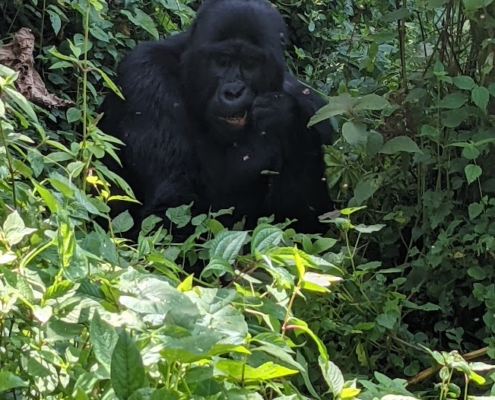
- Chimpanzees are mainly found along equatorial Africa with the densest populations in Uganda, Rwanda, Tanzania and the Democratic Republic of the Congo. Outside of Tanzania, you can add on a tour to go see the rare mountain gorilla.
- The best place to see the chimpanzees in Uganda is Kibale National Park. Over 1500 chimpanzees call this place home. Most chimpanzee families in this park have been habituated to humans and are unphased by their presence.
- Habituation is a slow process where chimpanzees are introduced to humans. Eventually allowing the family to be tracked on a typical chimpanzee trek. It is also easier for scientists to observe their behavior.


Do I need a permit?
YES!
- The reason permits are required is to help conserve these endangered species.
- They are separate from gorilla permits, but much cheaper.
- Permit costs vary depending on the season and which park you choose.
- Kibale National Forest: ~$200(peak) and ~$100(low)
- Budongo Forest Reserve (near Murchison Falls): ~$130(peak) and ~$120(low)
- Kyambura Gorge (in Queen Elizabeth’s National Park): $50
- Easiest way to secure a permit is through a local tour company.
How challenging is chimpanzee trekking?
- Unlike gorilla trekking, chimpanzee trekking is rather easy. They don’t live at altitude and the trails you follow are flat.
- Trails can get a little treacherous during the rainy season (March – May & September – November) which makes it more challenging.
- Also, during the rainy season vegetation is thick so seeing them swinging amongst the treetops may be harder…they’re a vocal species so you’ll definitely hear them.
What do I need to bring during a chimpanzee trek?
- Sturdy shoes with a good grip in case you have to walk up a muddy slope.
- Lightweight clothing: most people wear long sleeves to help protect them from bugs and the occasional brush.
- Rain jacket is also suggested since you are going into a rainforest.
- Face mask: this was required when we went at the end of the COVID-19 pandemic but they were talking about keeping the rule. Chimps are extremely susceptible to human diseases so this helps protect them from what we may inadvertently introduce.
- Water
- Insect repellant
- Binoculars
- Camera…flashes are prohibited
What it is actually like hiking with chimpanzees.
Well, we went with the tour company that we had initially booked a 3-day gorilla trek with right before the pandemic broke out. When we finally rebooked our vacation we extended our stay in Uganda and added on a trek with the chimpanzees. The tour guide greeted us at the Entebbe airport; we couldn’t fly to Kigali, Rwanda due to the land borders being closed because there was a personal conflict between the two presidents at the time. Unfortunately, this added on extensive travel time between cities. It took us about 6 hours to get from Entebbe to our lodge in Kibale National Park. We could tell we were in primate paradise as there were baboons and red-tailed monkeys everywhere. The rest of the day was for us to relax and enjoy the lodge.
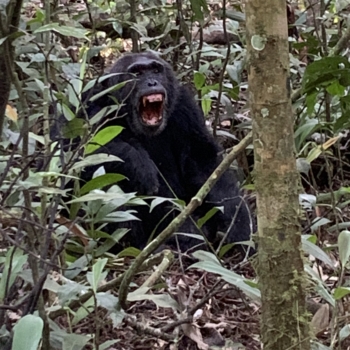
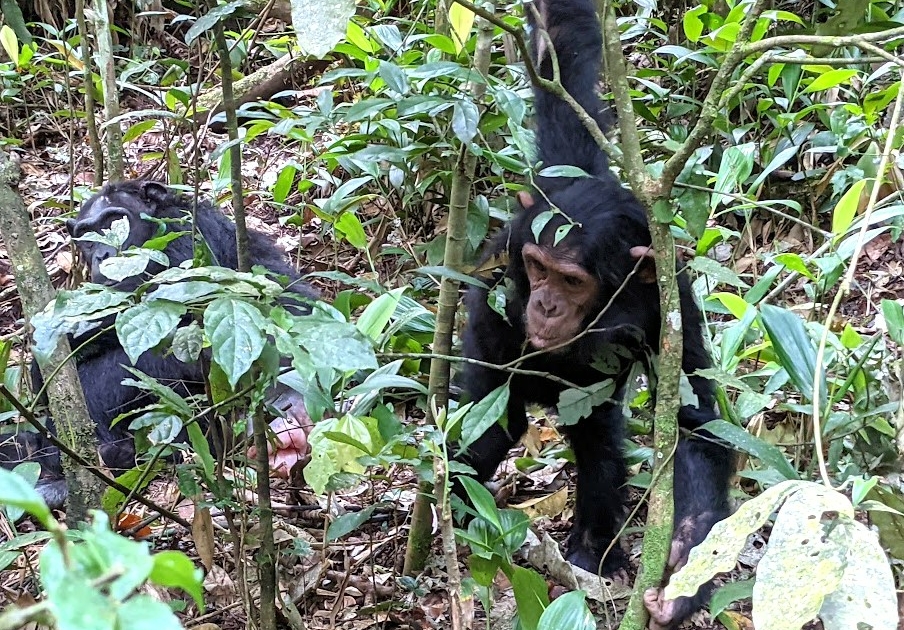
The next morning was early; our trek started at 8 a.m. and we didn’t want to be late to the orientation at the Kanyanchu visitor center. Lucky for us we didn’t have to hike very far before we started to hear and see the chimpanzees swinging among the treetops. They were very vocal the entire time we were there. Once you start seeing the chimpanzees you are only allotted 1 hour with them, this helps prevent them from getting stressed. During this time it is always recommended you keep a safe distance between yourself and them. However, they are curious creatures and that may not be possible. There were a couple of times we had rather close encounters with some of them.
When we first entered into their territory walking single file on the trail, a male chimpanzee decided he wanted to walk on the trail the opposite direction. The guide told everyone to clear the way so he didn’t feel threatened, but he didn’t wait for all of us to get out the way. I was stuck on a fallen tree and he pretty much knocked my father out of the way (not aggressively). Another time, we were leaving and another male chimp…see a pattern…moved to where we needed to go and was making faces at us. We waited for ~5 minutes because the guide thought he was going to show off. He didn’t end up doing anything until my husband went by and he tangled him up in a vine. Again, no-one was hurt, just him showing off.
Even though the chimpanzees were the main attraction, don’t forget to enjoy the other species in the forest. There are at least 13 other primate species in that forest and countless exotic birds and flora to keep an eye out for. Then we went back to the lodge for some lunch and quick nap.

Is there anything else to do out there?
There’s plenty of things to do:
- You can always relax around the lodge and take in the views of undisturbed rainforest.
- Add-on a chimpanzee habituation experience.
- This way you get to spend hours with a particular family observing them and allowing them to get used to the human presence.
- Go on a bird-watching adventure at Bigodi swamp sanctuary.
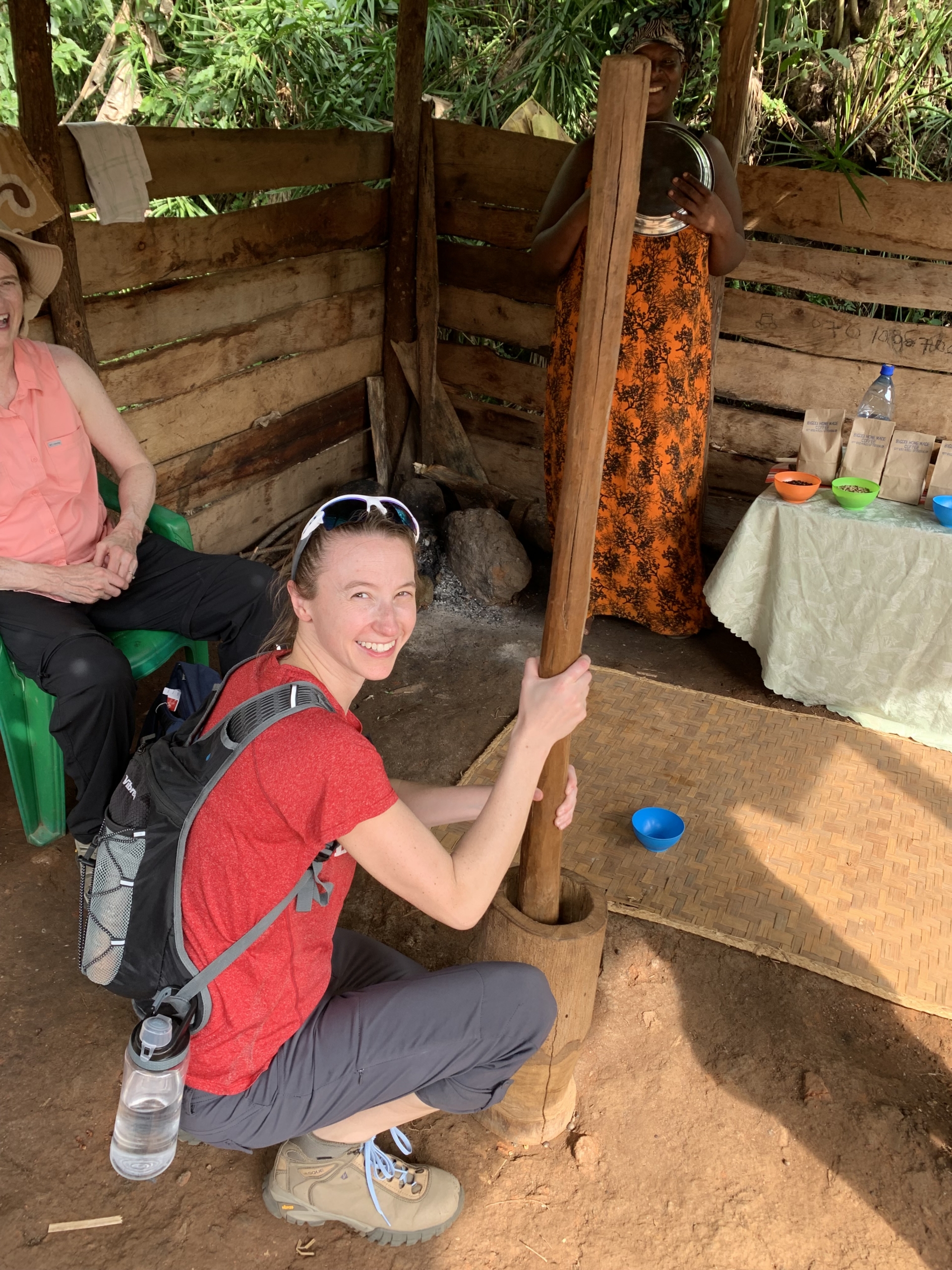
- Go on a cultural walk through Bigodi homesteads.
- Witness how they prepare different foods and beverages.
- Maybe even sample some banana beer.
- Visit the medicine man.
- Medicine men are men that treat all sorts of ailments with different combinations of herbs and invoking ancestral spirits.
- Visit the Bigodi Women’s Group
- Watch them create intricate crafts from materials they got from the swamp.
- Witness how they prepare different foods and beverages.